
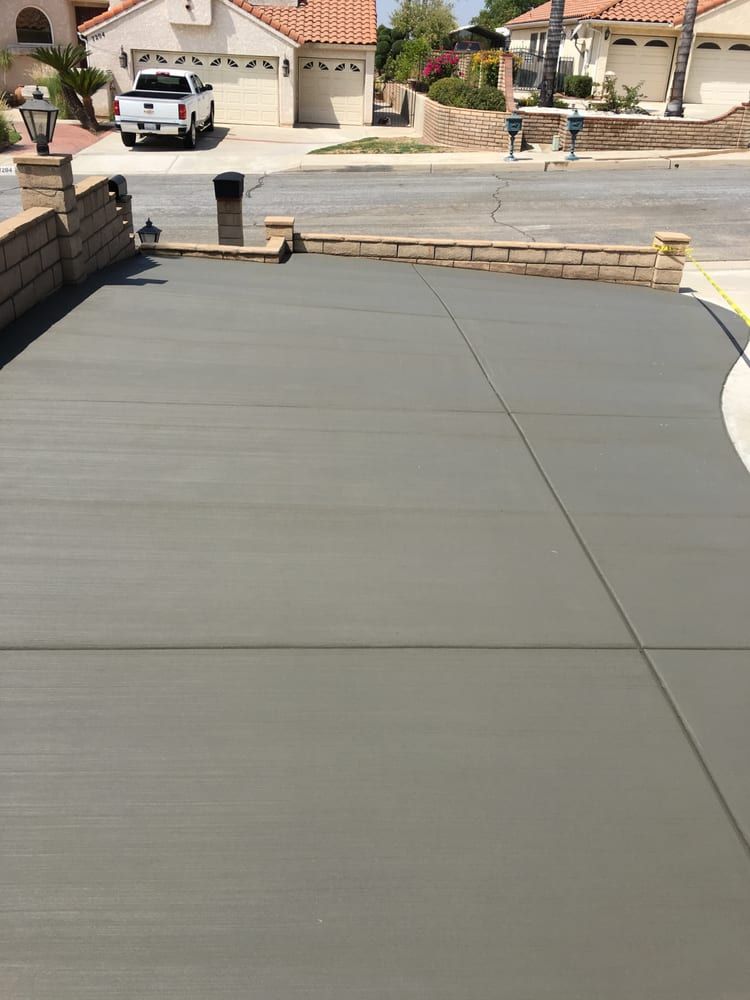
Three things decide whether concrete poured in Hamilton is still flat in ten years. What the Hamilton concrete contractors do about the ground under it. Whether they handle the council side properly. And how much of the job they actually wrote into the quote.
Most homeowners compare quotes on price and finish, because those are the two parts of the job you can see. The parts that fail first are underneath: the basecourse, the reinforcement and the drainage. Those are also the parts a cheap quote leaves out.
Generic advice about choosing a concreter works in most cities. It works less well here, because Hamilton sits on ground that behaves differently from Auckland or Tauranga, and because the council has its own process for anything that meets the road. This guide covers both, plus the questions worth asking before you sign anything.
What the Ground Is Doing Under Your Section
The Waikato holds about half of New Zealand’s peatlands, and the deposits through the region run up to 11 metres deep and took more than 18,000 years to form. Hamilton is built across and around them.
Peat is roughly 90 percent water. Put load on it and it compresses, then it keeps compressing for years as the organic matter breaks down. Drain the ground for a subdivision and the same thing happens without any load at all. The visible results around Hamilton are familiar once you know to look for them: houses that have gained an extra step up to the front door, back lawns that pond after every decent rain, cracked floors, power poles leaning out of true.
A slab is a heavy thing to put on ground like that. A 100mm driveway weighs roughly 240kg per square metre before a vehicle parks on it.
So the first question is what is actually under your section, and the honest answer is that it varies street by street. Hamilton is not uniformly peat. Much of the central city sits on volcanic ash and alluvial terraces that are perfectly good ground. The western and southern fringes, the gully edges and the newer subdivisions on former swamp are where it gets interesting.
What a contractor who knows Hamilton does differently:
- Digs a test hole rather than quoting off a photo. Peat is obvious once you are 300mm down and smells like a garden bed.
- Asks how old the subdivision is. Recent developments often sit on engineered fill placed over peat, and the fill is only as good as the compaction record.
- Designs joints for movement where the ground is suspect, so the slab cracks where they cut it and not across the middle.
- Tells you when the answer is an engineer. A garage slab or a house pad on peat-influenced ground is a specific design job, not something to eyeball.
A contractor who says the ground makes no difference to the price has told you they are not going to look at it.
Vehicle Crossings and Building Consents Are Two Different Questions
“Do I need council approval?” is never one question. In Hamilton there are separate regimes, they have separate answers, and a contractor who treats them as one thing is guessing.
Hamilton City Council Vehicle Crossing Approval
The vehicle crossing is the section of driveway between your boundary and the road. If you are putting in a new one, adding a second one, or rebuilding an existing one, an application goes to Hamilton City Council before the work happens.
The numbers as the council publishes them:
| Item | Fee |
| Application and inspection (covers three site visits) | $424.00 |
| Additional site inspection | $142.00 |
| Plan certification | $255.00 per hour |
Three inspections come with the application fee, including one before the pavement goes in and a final one that needs 48 hours notice. Failed inspections cost extra. The permit lapses if the work is not finished within six months of issue, which matters if you are getting a driveway done as part of a build that slips.
Work in the road reserve also needs a Corridor Access Request lodged through beforeudig.co.nz, and the council builds crossings to the Regional Infrastructure Technical Specifications rather than to whatever the contractor normally does.
None of that is difficult. It is just work, and someone has to do it. Ask who.
Where a Building Consent Comes Into It
This is a different regime with a different answer. The one part worth knowing as a homeowner: foundations and floor slabs are classed as restricted building work, which means that work has to be carried out or supervised by a Licensed Building Practitioner and the LBP has to record it.
So a shed pad, a garage floor or a house slab is a different conversation from a path around the side of the house. If a contractor quoting your garage floor cannot tell you who the LBP on the job is, that is the answer to your question about them.
For anything else, ask the contractor which approvals your specific job needs and who lodges them. A good one will have checked before quoting. Do not accept “you won’t need anything for that” without them having looked.
What a Proper Hamilton Concrete Quote Spells Out
A quote that says “supply and lay concrete driveway, 60m2, $X” tells you nothing you can compare. Two contractors can both write that sentence and be quoting jobs that differ by half the price, because most of the cost sits in decisions the sentence does not mention.
A quote you can actually judge names these:
| What it covers | What to look for |
| Excavation depth and spoil | How deep they are digging and who carts the dirt away |
| Basecourse | The material, the depth, and that it is compacted in layers |
| Slab thickness | Stated in mm, and different for a path than a driveway |
| Reinforcement | Mesh or steel, the grade, and where it sits in the slab |
| Concrete strength | Stated in MPa |
| Joints | Where control joints go and when they get cut |
| Falls and drainage | Which way the water runs and where it ends up |
| Finish | Broom, exposed aggregate, stamped, coloured |
| Council fees | Whether the crossing application fee is in the price or on top |
| Exclusions | Everything the price does not include |
That last row is the one people skip and the one that causes arguments. Ask for it in writing.
Two Hamilton-specific things to watch in a quote. If the ground is soft, the basecourse depth is the number that should change, so a quote that uses the same build-up on peat as on volcanic ash has not accounted for your section. And if the job touches the road, check whether the council fee and the crossing work are in the quote or sitting outside it, because a $424 surprise after the fact is a bad start to a relationship.
On reinforcement, a straight answer matters more than the specification itself. Mesh sitting on the ground does nothing. It has to be held up in the slab, on chairs, and a contractor who cannot explain how they do that should not be pouring your driveway.
Questions to Ask Before You Sign
Six questions, and the answers a contractor who knows Hamilton gives.
“Have you dug a test hole?” The answer you want is yes, or an offer to. On a driveway or a shed pad, a contractor who has not looked below the topsoil is pricing a guess. If they have dug one, ask what they found.
“How thick, and why that thick?” You want a number and a reason attached to your section, your vehicles and your ground. A contractor who quotes the same thickness everywhere is quoting a habit.
“Who lodges the council application, and is the fee in this price?” Covered above. The answer should be immediate.
“Where does the water go?” Concrete does not absorb water, so every square metre you lay sends rain somewhere it did not go before. Down the drive toward the garage door is the wrong answer. They should be able to point at where it goes.
“What happens if it cracks?” Every concrete slab cracks somewhere. The useful answer explains control joints, which is the contractor deciding in advance where the crack goes. Anyone promising a driveway that will never crack is either inexperienced or hoping you are.
“How long before I can drive on it?” A real answer accounts for weather and season. Hamilton winters are cold and damp, which slows curing, and a contractor who quotes the same timeframe in July as in February is reading off a card.
One more that is not a question. Ask for two addresses in Hamilton where they have done the same work, done at least two years ago. New work looks good. Two-year-old work tells you whether the base was right.
Red Flags Worth Walking Away From
A quote given over the phone or from a photo. Nobody can price excavation without seeing where the truck parks and what comes out of the hole.
Cash only, or a large deposit up front. A deposit to cover materials is normal on a big pour. Half the job before anyone turns up is not.
“We happen to have concrete left over from another job.” This is a doorknock script that has been used in the Waikato for decades. Ready-mix is ordered to the load and paid for either way, so there is no leftover to sell you cheap.
No written quote. A verbal number is not a contract and gives you nothing to hold anyone to.
No GST number and no business name you can find. Both are thirty seconds to check on the Companies Office register and the NZBN lookup.
Pressure to decide today. Concrete contractors with a full book do not need an answer this afternoon.
Vagueness about the base. The most expensive failure in residential concrete is a slab that was fine and a base that was not. A contractor who talks only about finish has told you where their attention goes.
A price well below the others. Sometimes it is a contractor with lower overheads. More often it is thinner concrete, less steel, a shallower base, or excavation and cartage that reappear as a variation later. Ask what is different about their build-up, and compare the specifications instead of the totals.
What Drives the Cost of a Hamilton Concrete Job
Square metre rates for concrete move with cement and fuel prices, so any number published today is wrong within a year. What does not change is the list of things that decide where your job lands, and knowing that list is more useful than a rate you cannot hold anyone to.
Small areas cost more per square metre than large ones. Setup, formwork and minimum concrete loads do not scale down, so a short path can cost nearly as much per square metre as a driveway four times its size. Expect that rather than treating it as a contractor padding the price.
What moves a Hamilton job up or down, roughly in order of impact:
- Ground conditions. Soft or peat-influenced ground means more excavation, more basecourse and sometimes an engineer. This is the biggest single variable in this city and the one least visible in a quote.
- Removing what is there. Breaking out and carting away an old drive is a job in itself. Concrete cartage is priced by weight.
- Access. If the truck cannot reach the pour, concrete gets barrowed or pumped, and both cost. Narrow rear sections around the older central suburbs are where this bites.
- Thickness and reinforcement. A slab built for a horse float is not a slab built for a hatchback.
- Drainage. Channel drains, sumps and connections are separate work.
- Finish. Exposed aggregate and stamped work take more labour and more care in the weather window.
- Shape. Curves, steps and tight corners mean more formwork per square metre than a rectangle.
Council fees sit outside all of this. If your job includes a vehicle crossing, check whether the application fee and the crossing work are inside your contractor’s price or on top of it.
One thing worth knowing when comparing quotes. Some published rates are supply and lay only, with excavation, basecourse and cartage quoted separately. Others are a complete job. Two numbers that look 30 percent apart are often the same job scoped differently, so check what each one includes before deciding one is expensive.
Hamilton Concrete Questions, Answered Briefly
Do I need council approval for a new driveway in Hamilton? For the vehicle crossing, yes. Any new, additional or rebuilt crossing between your boundary and the road needs an application to Hamilton City Council before work starts. Work in the road reserve also needs a Corridor Access Request lodged through beforeudig.co.nz.
What does the council charge? $424.00 for the application and inspection, which covers three site visits. Additional inspections are $142.00 each. Plan certification is charged at $255.00 an hour.
How long is the crossing permit good for? It lapses if the work is not completed within six months of issue.
Does my concreter need to be licensed? For general flatwork, there is no concrete-specific licence in New Zealand. For foundations and floor slabs, the work is classed as restricted building work and has to be carried out or supervised by a Licensed Building Practitioner. Ask who the LBP is before any slab job starts.
How long before I can use it? Ask your contractor for your job and your season. Hamilton winters are cold and damp, which slows curing, so the same slab poured in July needs longer than one poured in February. Foot traffic comes well before vehicle traffic.
Will it crack? Somewhere, yes. Every concrete slab moves. The question is whether the cracks happen at control joints the contractor cut on purpose, or across the middle of your driveway. That is decided by the base, the reinforcement and the joint layout, not by luck.
Is peat actually a problem on my section? It depends on where you are, and the only way to know is to look. Peat is widespread through the Waikato but Hamilton is not uniformly peat, and the difference can be a few streets. A test hole answers it in an afternoon.
How many quotes should I get? Three, and compare the specifications rather than the totals. If one is much cheaper, find out what is different about the build-up before assuming you have found a bargain.
Sources
Council fees are current as at September 2026. Check the council page before relying on a figure.…


 As a landlord, one of your biggest responsibilities is maintaining the quality and habitability of your rental property.
 an annexure to it. Proper documentation, including checklists and invoices from cleaning services, should be maintained for every tenant turnover. This will help you resolve any disputes and could be crucial in cases that involve legal action.
 appliance is plugged into an outlet. The electrical system at a residence or business is made up of circuits. On any given circuit there may be many outlets that tie into it. These circuits form a continuous loop. When an appliance is plugged into an outlet there’s a slight interruption when the plug and the outlet connection almost touch. An electrical current can easily bridge this small gap and create a blue spark of electricity. Sometimes the spark is visible. However, regardless of whether the spark is visible or not, this happens every time an appliance is plugged in. This is a normal occurrence because electrical currents run hot on a continuous loop.
 Fortunately, there are tell-tell signs that will let you know if you are witnessing good sparks or dangerous sparks. There are four types of sparks that should be investigated because they could be potentially dangerous:
 providing an appealing look to the homeowner. Timber floors are affected by hard stains which are impossible to come out through the use of normal washing. Sanding equipment is used in providing a smooth and beautiful
 If there are no lines in parking spaces, people may go ahead and park their cars at any place provided their cars will fit. This is not good because cars will be boxed in making it very hard for some cars to leave the area. In addition, the cars will be packed haphazardly and this can increase high chances of having dents and scrapes during navigation. A parking lot which has been marked by experts will accommodate the maximum number of vehicles possible because they will be parked in specific areas.
 reduces the chances of denting other cars or being trapped by other cars. Therefore, if you are launching a new business or a shop, make sure your parking lot is well marked to attract customers. Finally, instead of doing it yourself, you should consider hiring a line marking
 This has always been one of the best ways to find a great drywall contractor or other great service business. What your friends, family members and even strangers say about a drywall
 employees? These are all signs of good or bad communication. These experiences will also let you know if they will tell you about those problems they encounter or just hide them away from you.


 means you will not have to bear the cost of repairs and restorations. You should also not ignore the time you would waste repairing and restoring these lines. Non-destructive digging is also beneficial if you want to excavate a place with many people. The technology is very silent, especially in comparison to traditional mechanical equipment.
 Several things get worn out or break down due to the repeated use. Similarly, a home requires regular maintenance and home repair if you want it in good shape. The Proper home repair will ensure that you get back the home that makes you feel comfortable and lively. Do not neglect the small and straightforward repair works as these may turn out to be a significant expenditure later on for you.

 Poor roofing is especially dangerous in case of storms and heavy rains. Rooms, basements, kitchens, bathrooms, and roofs are certain places or areas of the house that should be checked and repaired by an expert professional. To ensure that you hire the best contractor for the workers who can conduct all the required repairs without any complications and issues.…

 The general tools that your basic home repair toolkit should include are a hammer, flat screwdriver, pliers, and wrenches. Other things like washers, nails, nuts, screws, and bolts can also be added to the kit. It is unpredictable as anything may break down and may need a temporary fix. So it is best to have a home repair tool kit handy in such situations.